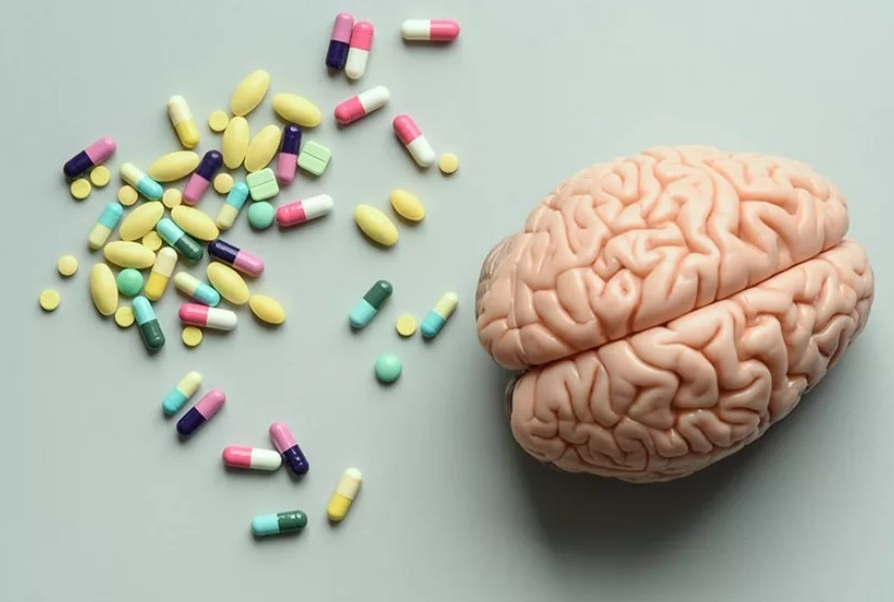
The brain is the most complex and resource-intensive organ. But what if it can be ‘upgraded’: make it work faster, remember more, do not get tired under the load and always keep motivated? Caffeine and pharmaceutical stimulants are being replaced by a new generation of smart substances — nootropic peptides. These are not just stimulants, they are ‘instructions’ for brain cells that can speed up learning, restore nerve tissue and restore sharpness of mind. How do they work and how to choose your ‘key’ to cognitive superpowers?
What are nootropic peptides and how do they work?
Nootropics (from the Greek. ‘noos’ — thinking and ‘tropos’ — direction) are substances that improve higher mental functions: memory, learning, concentration and resistance to stress.
Unlike classical stimulants (caffeine, modafinil), which roughly ‘spur’ the nervous system, peptides act pointwise and physiologically. These are short chains of amino acids that:
- They are growth factors. They stimulate the growth of new neurons (neurogenesis) and the formation of connections between them (synapses), literally rejuvenating and restoring the brain.
- Improve neuroplasticity. This is the brain’s ability to readjust, which is critical for learning and adaptation.
- Regulate neurotransmitters. Gradually increase the level of dopamine, serotonin and acetylcholine, which are responsible for motivation, mood and speed of thinking.
- They protect neurons. They have a neuroprotective effect, protecting brain cells from damage, aging and toxins.
Opportunities Gallery: An overview of key Nootropic peptides
Each peptide solves its own range of tasks. The right choice depends on your goals.
1. For memory, learning and brain recovery: Peptides-neuroregenerators
- P21 (Cerebrolysin) — ‘Builder’ for the brain.
- How it works: It is a powerful memitic agent of CNTP (ciliary neurotrophic factor), one of the main factors of neuronal growth. It not only temporarily improves function, but also actively repairs damaged nerve cells and stimulates the growth of new ones.
- Effects: Significant improvement in long-term memory and learning ability. Recovery from strokes, traumatic brain injuries, inhibition of neurodegenerative processes (Alzheimer’s disease). In a healthy brain, it gives ‘clarity of mind’ and increased resistance to mental overload.
- Nuance: The effect is cumulative and long-term. This is not a stimulant, but a repair team for your central nervous system.
- Semax — ‘Guide’ and accelerator.
- How it works: Synthetic analog of the ACTH hormone fragment. It has no hormonal activity, but it perfectly penetrates the brain and protects neurons from damage.
- Effects: Speed up information processing, improve concentration and short-term memory. Increases the brain’s resistance to stress and hypoxia (lack of oxygen).
- Nuance: The effect is felt quickly, as early as 15-20 minutes after intranasal administration.
2. For motivation, energy and antidepressant effect: Peptides-mood regulators
- PE-22-28 — ‘Psychotherapist’ in peptide form.
- How it works: A unique peptide that acts on the brain’s reward system, gently and steadily increasing the level of dopamine, serotonin and norepinephrine.
- Effects: Pronounced antidepressant effect without the side effects of traditional antidepressants (does not cause apathy, drowsiness or decreased libido). Returns motivation, interest in life, a sense of ‘inner core’ and satisfaction.
- Nuance: This is not a stimulant, but rather a’ normalizer ‘ of mood. It removes dullness and apathy, restoring natural joy and purposefulness.
- Adamax (improved Semax) — ‘Energy and Focus’.
- How it works: A modified version of Semax with the addition of an admantane group, which improves penetration into the brain and prolongs the action.
- Effects: More powerful and prolonged effect than Semax. It provides pure energy, concentration, sharpened attention and a slight increase in libido due to the effect on the melanocortin system.
- Nuance: Ideal for periods that require maximum mental performance and concentration (deadlines, complex projects, exams).
3. For complex health improvement and neuroprotection: Multifunctional peptides
- Ipamorelin / ARE-290 — ‘Universal defenders’.
- How it works: These peptides are mimetics of erythropoietin, but without its main effect — stimulating the production of red blood cells (erythropoiesis). Their action is focused on receptors in other tissues.
- Effects:
- Removal of neuroinflammation: Chronic inflammation in the brain is one of the causes of head fog and fatigue.
- Improved insulin sensitivity: This has a positive effect on the energy supply of neurons.
- Acceleration of nerve regeneration: Helps with damage to the peripheral nervous system.
- Analgesic effect.
- Nuance: The effect does not appear immediately, but as it accumulates. This is a background support and recovery of the entire nervous system.
Hidden nuances and selection strategy
- The introduction path solves everything. Most peptides for cognitive purposes are used in the form of intranasal sprays. , which is the fastest and most effective way to deliver the substance directly to the brain, bypassing the systemic circulation. Injectable forms are more suitable for systemic, general health effects.
- Search for your ‘key’. The response to peptides, especially those affecting the melanocortin system (Adamax, PT-141), is very individual due to genetic characteristics. What causes a surge of motivation in one person may not have a noticeable effect on the other. Individual selection is required.
- Combinations instead of monopreparations. Peptides are often combined for a synergistic effect. The classic bundle- P21 + Adamax. The first deals with long-term ‘repair’ and improvement of memory, the second-gives an immediate increase in energy and focus. ‘Gas and Brake’ together create the perfect platform for productive work.
- These are not ‘mind pills’. Nootropic peptides unlock your brain’s potential, but they are no substitute for sleep, healthy eating, and constant learning. They create favorable conditions, but you should fill your brain with knowledge and experience yourself.
Here are less popular nootropic peptides
1. Noopept (Noopept)
- Mechanism: A synthetic peptide similar to piracetam, but with its own unique mechanism. It stimulates the synthesis of cyclic AMP (cAMP) and BDNF (brain-derived neurotrophic factor) and improves the fluidity of neuronal membranes.
- Effects: Improved learning and memory (both short-term and long-term), pronounced anti-anxiety effect, increased brain resistance to hypoxia and toxins. Gives ‘mental clarity’ without stimulation.
2. Selank
- Mechanism: Synthetic peptide derived from taftsin. It inhibits enzymes that break down enkephalins and endorphins (‘joy hormones’), and modulates the GABA-ergic system.
- Effects: Strong anti-anxiety and anti-depressive effects, improved memory and learning ability, increased resistance to emotional and physical stress. It is often used to relieve panic attacks and social anxiety.
3. Dimethylaminoethanol (DMAE)
- Mechanism: A precursor to choline, it increases levels of acetylcholine — a key neurotransmitter for memory, learning, and concentration.
- Effects: Improve cognitive functions, improve the tone of the central nervous system, improve mood and sleep quality. Also known as mild-a stimulator that promotes ‘focus’.
4. Пи-21 (Piracetam-21)
- Mechanism: An advanced Piracetam analog developed for higher bioavailability and efficacy. Improves brain glucose metabolism and synaptic transmission.
- Effects: Improve verbal and logical memory, increase neuroplasticity, and protect neurons from aging. It is considered a more powerful and’ pure ‘ version of the classic nootropic.
5. Nazefilin (N-Acetyl Semax Amidate)
- Mechanism: An even more advanced version of Semax. Acetylation and amidation increase the stability of the molecule and its ability to cross the blood-brain barrier.
- Effects: It is considered the most powerful derivative of Semax. Provides extremely rapid and pronounced improvements in cognitive function, focus, and energy. The effect is more pronounced and prolonged than that of Adamax.
6. Cerebrolysin (already mentioned as P21, but deserves a separate point as a complex)
- Mechanism: A complex peptide preparation derived from the brain of pigs. It contains low-molecular-weight neuropeptides and amino acids that penetrate the BBB and have a multimodal effect.
- Effects: Powerful neuroprotective and neurotrophic effect. Accelerates recovery from strokes and injuries, improves cognitive functions in neurodegenerative diseases. In a healthy brain, it can significantly increase stress resistance and mental performance. Note: Often used in an injectable form.
7. Luteinizing hormone (LH) and its fragments
- Mechanism: Some studies suggest that certain fragments of LH may have a positive effect on cognitive function, possibly through interaction with receptors in the hippocampus.
- Effects: The potential effects of improving memory and neurogenesis are being studied, but the evidence base is less extensive than that of other peptides on this list.
8. Oxytocin Fragments
- Mechanism: Synthetic analogues of oxytocin ,the ‘trust and attachment hormone’.
- Effects: When administered intranasally, they can improve social cognition, recognize emotions, and reduce anxiety in social situations. Their impact on empathy and trust is studied.
Of course! There is a whole world of less well-known, but no less interesting nootropic peptides that are being researched in scientific circles and used in biohacking communities. Many of them have very specific and narrowly focused mechanisms of action.
Here is a list of such little-known peptides-nootropics:
And very little known as nootropic peptides
1. Epithalon (Epiphamine)
- Mechanism: Synthetic tetrapeptide, an analog of epiphysis (pineal gland) hormone-epiphysarin. Normalizes the production of melatonin and cortisol, restores circadian rhythms.
- Effects: The main effect is a powerful anti-age effect. It is believed that it ‘rejuvenates’ the epiphysis, which leads to normalization of sleep, improvement of the hormonal background, strengthening of immunity and, as a result, to improvement of cognitive functions and memory in old age. It is not a stimulant, but works through deep restoration of regulatory systems.
2. GHRP-6 and other ghrelin compounds
- Mechanism: Although they are primarily growth hormone releasers, they have an interesting nootropic effect. They stimulate ghrelin receptors in the hippocampus — an area of the brain critical for memory and learning.
- Effects: In addition to the somatotropic effect, there is an improvement in spatial memory and learningability, as well as a decrease in anxiety. The effect is indirect, but noticeable.
3. L-Carnosine Dipeptide
- Mechanism: L-carnosine itself is known as an antioxidant, but its dipeptide form is more stable and bioavailable. Protects the brain from glycation and oxidative stress.
- Effects: Protecting against neurodegeneration, improving mitochondrial function in neurons, and supporting long-term cognitive health.
4. НАП-2 (Activity-Dependent Neuroprotective Protein)
- Mechanism: A fragment of the larger ADNP protein, which is one of the most important factors in neuroprotection. Critical for brain development and cognitive function.
- Effects: It is being studied for the treatment of disorders such as autism and schizophrenia. One of the most advanced and ‘futuristic’ peptides can potentially enhance synaptic plasticity and cognitive flexibility in healthy people. .
5. Dalargin
- Mechanism: Synthetic analog of enkephalins (brain opioid peptides). It is not addictive like classic opioids, but modulates opioid receptors.
- Effects: Strong anti-stress and anti-anxiety effect, improved resistance to emotional stress. It can improve sleep and overall nervous system health.
6. Delta [Glu]peptide₂ — ₂[Lys]
- Mechanism: A synthetic peptide with a unique mechanism that affects ion channels and increases the survival rate of neurons under stress.
- Effects: Increased brain resistance to ischemia and hypoxia (lack of oxygen). It is being studied as a powerful tool for stroke prevention. For healthy people, it can mean increased resistance to mental overwork.
7. Bioregulatory peptides of the cerebral cortex (for example, Cortexin)
- Mechanism: A complex of polypeptides derived from animal brains. They have a multifunctional effect: nootropic, neuroprotective, antioxidant.
- Effects: Improvement of higher brain functions (memory, attention, learning), increasing the brain’s resistance to damaging effects. It is widely used in neurology in the CIS countries, but is little known in the West. Note: Often in an injectable form.
8. TANK (Bromo-Acetyl-Carnitine)
- Mechanism: A modified form of acetyl-L-carnitine, which increases the synthesis of acetylcholine and stimulates the growth of nerve endings.
- Effects: More powerful effects on memory and cognitive functionsthan the standard ALCAR. It can be especially useful for age-related cognitive decline.
9. Cerebrolysin polypeptides
- Mechanism: Although cerebrolysin itself is known, its effect is associated with specific low-molecular-weight peptides (less than 10 kDa) that cross the BBB and act as signaling molecules for the growth and survival of neurons.
- Effects: Direct ‘delivery of instructions’ for neurons, causing them to grow and form new connections. This is one of the most powerful neuroregenerators in existence.
Important warnings:
- Experimental status. Many of these peptides have a weak evidence base for use in healthy people and are at the stage of basic research.
- Individual response. The effects can vary greatly and be unpredictable.
- Source and purity. The purchase of such rare peptides is associated with a high risk of obtaining a low-quality or contaminated product.
These substances represent the ‘cutting edge’ of neuropeptide research and have not yet become mainstream due to the complexity of production, narrow application, or lack of large clinical trials.
Добавить комментарий