Copper (Cu)
Copper is an essential traceelement that is involved in:
✔ Formation of hemoglobin (together with iron).
The work of antioxidant enzymes (superoxide dismutase, cytochrome c oxidase).
✔ Synthesis of collagen and elastin (important for skin, blood vessels, bones).
✔ Functioning of the nervous system (participates in the synthesis of neurotransmitters).
✔ Energy exchange (mitochondrial respiration).
Ceruloplasmin
Ceruloplasmin is a copper-containing proteinthat:
✔ Transports 90% of the copper in the blood.
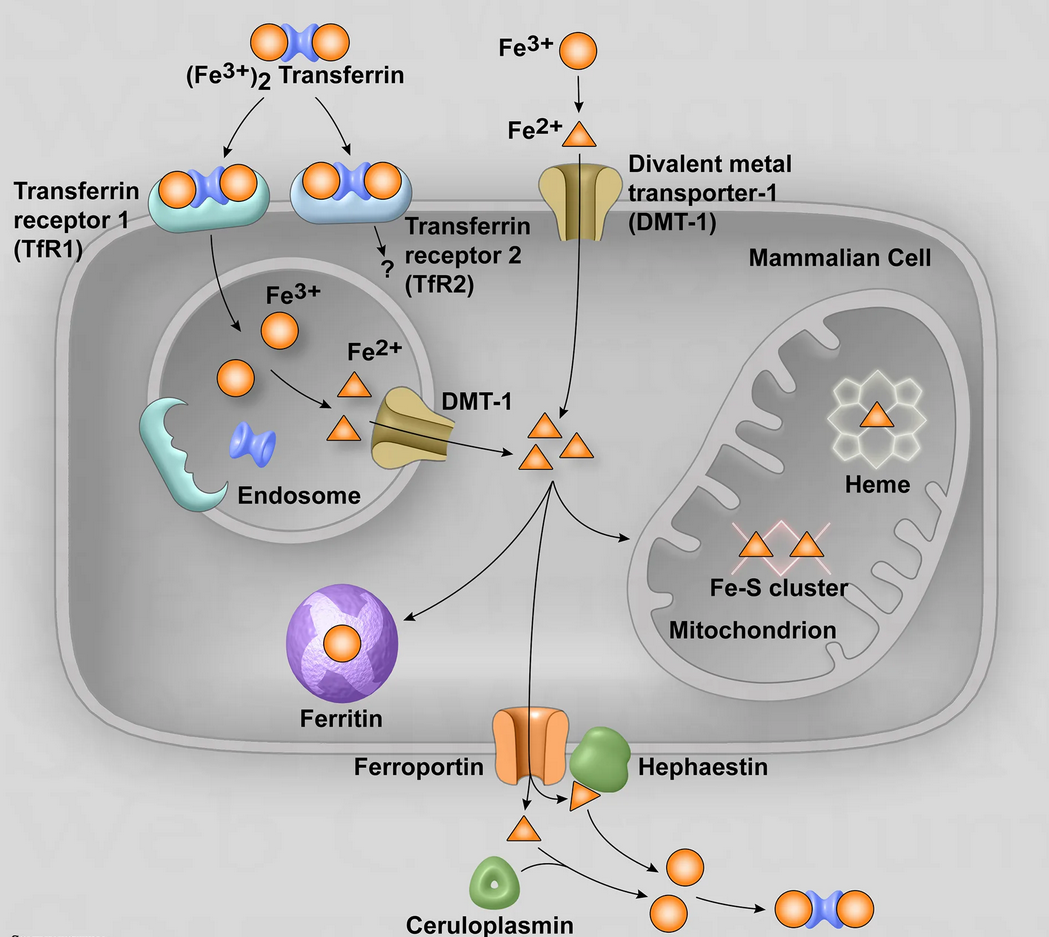
✔ Participates in iron metabolism (oxidizes Fe2⁺ to Fe3⁺ to bind to transferrin).
✔ It has antioxidant properties (protects cells from oxidative stress).
Symptoms of copper and ceruloplasmin deficiency
Causes of the deficit:
- Genetic disorders (Menkes disease -a mutation in the ATP7A gene ).
- Long -term parenteral nutrition (without copper).
- Excess zinc (competing for intestinal absorption).
Symptoms:
- Anemia (not treatable with iron).
- Fragility of blood vessels and bones (violation of collagen synthesis).
- Neurological disorders (seizures, developmental delay in children).
- Depigmentation of the skin and hair (disruption of tyrosinase).
- Reduced immunity (frequent infections).
Symptoms of excess copper and ceruloplasmin
Causes of excess:
- Genetic disease Wilson-Konovalov disease (violation of copper excretion).
- Chronic liver diseases (cirrhosis, cholestasis).
- Copper poisoning (rare).
Symptoms:
- Liver damage(hepatitis, cirrhosis).
- Neurological disorders (tremor, dysarthria, dementia).
- Kaiser-Fleischer rings (greenish-brown rings around the edge of the cornea).
- Mental disorders (depression, psychosis).
Norms in analyses
Copper in the blood (serum)
| Group | Norm (mcg / dl) | Norm (mmol / l) |
|---|---|---|
| Adults | 70–140 | 11–22 |
| Children | 50–120 | 8–19 |
| Pregnant women | 90–230 | 14–36 |
Ceruloplasmin in the blood
| Group | Norm (mg / dl) | Norm (g / l) |
|---|---|---|
| Adults | 20–60 | 0.2–0.6 |
| Children | 15–50 | 0.15–0.5 |
Copper in daily urine
- Norm: < 50 mcg/day (< 0.8 mmol/day).
- For Wilson’s disease: > 100 mcg / day.
When are tests scheduled?
- Suspected Wilson’s disease (neurological symptoms + liver damage).
- Anemiathat cannot be treated with iron.
- Assessment of nutrition status (with parenteral nutrition).
- Diagnosis of Menkes ‘ disease in children (hypotension, developmental delay).
What should I do if there are deviations?
With a copper deficiency:
- Diet: liver, seafood, nuts, cocoa.
- Supplements: copper gluconate (2-4 mg / day).
If there is an excess of copper (Wilson’s disease):
- Chelators (penicillamine, trientin).
- Zinc (blocks the absorption of copper in the intestines).
- Diet: avoid copper-rich foods (chocolate, mushrooms, shellfish).
Examples of interpretation
- Copper in the blood = 30 mcg / dl + anemia → deficiency, need supplements.
- Ceruloplasmin = 10 mg / dl + Kaiser-Fleischer rings → Wilson’s disease.
Conclusion
Copper and ceruloplasmin are key elements for antioxidant protection, iron metabolism, and nervous system function.
Rules:
- Copper: 70-140 mcg / dl (serum),
- Ceruloplasmin: 20-60 mg / dl.
Deficiency causes anemia, neurological disorders.
Excess (Wilson’s disease) leads to liver and brain damage.
Treatment: diet, chelators (in excess), copper supplements (in deficiency).
Important: If Wilson’s disease is suspected, check the copper in the urine and the level of free copper in the blood.
Добавить комментарий