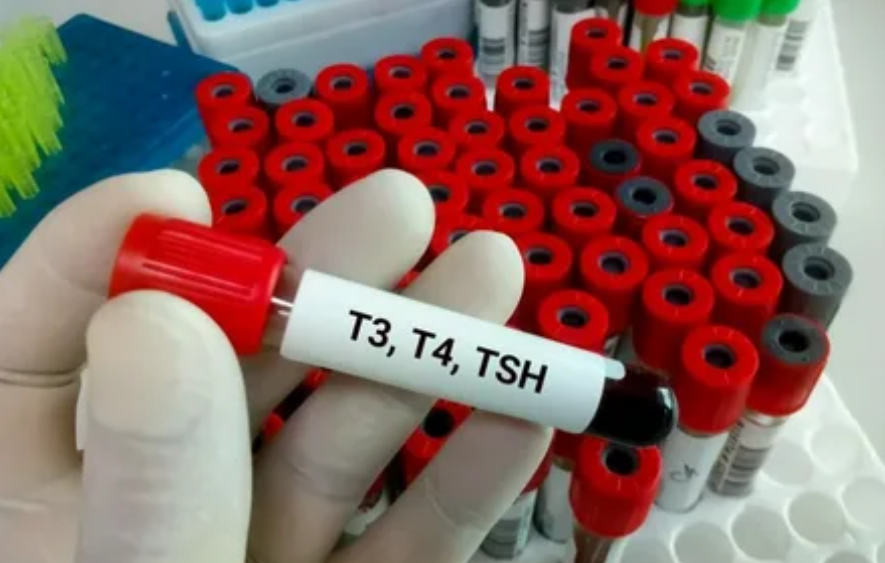
The role of free T4 (thyroxine) in the body
T4 free (FT4) is an inactive form of thyroid hormone produced by the thyroid gland. . It serves as the main ‘reserve’ from which active T3 (triiodothyronine) is formed in the tissues.
Key features:
- Metabolism:
- Regulates basal metabolic rate(the rate at which calories are burned at rest).
- It affects the synthesis and breakdown of proteins, fats, and carbohydrates.
- Energy balance:
- Supports body temperature and energy production.
- Cardiovascular system:
- Increases your heart rate (HR) and sensitivity to adrenaline.
- The nervous system:
- Provides normal brainfunction, concentration and memory.
- Growth and development (in children):
- It is critically important for the formation of the central nervous system and bone system.
- Reproductive health:
- It affects women’s menstrual cycle and fertility.
Symptoms of free T4 deficiency (hypothyroidism)
Reasons:
- Autoimmune thyroiditis (Hashimoto’s disease).
- Iodine deficiency (endemic goiter).
- Surgery/radiation of the thyroid gland.
- Hypopituitarism (TSH deficiency due to pituitary gland problems).
Symptoms:
- Chronic fatigue, drowsiness, weakness.
- Chilliness, cold intolerance.
- Weight gain (swelling, slow metabolism).
- Dry skin, brittle hair and nails.
- Slow heart rate (bradycardia), low blood pressure.
- Constipation, bloating.
- Depression, memory loss, ‘fog in the head’.
- Cycle disorders in women, infertility.
Symptoms of excess free T4 (hyperthyroidism)
Reasons:
- Graves ‘ disease (autoimmune hyperthyroidism).
- Toxic nodular goiter.
- Thyroiditis (inflammation with the release of hormones).
- Overdose of L-thyroxine.
Symptoms:
- Sharp weight loss(with increased appetite).
- Tachycardia, arrhythmia, sweating.
- Trembling hands, nervousness, insomnia.
- Diarrhea, frequent urination.
- Muscle weakness (especially in the shoulders and thighs).
- Exophthalmos (bug-eye in Graves ‘ disease).
- Violation of the menstrual cycle.
Norm of free T4 in the blood test
Reference values depend on the laboratory, but on average:
| Group | FT4 (pmol / L) | FT4 (ng / dl)* |
|---|---|---|
| Adults | 12–22 | 0.9–1.7 |
| Children | See age limits | — |
| Pregnant women | Lower than normal (due to the growth of binding proteins) | — |
* Translation: 1 pmol / l ≈ 0.078 ng / dl
Important:
- TSH level is the main marker for diagnosis (in hypothyroidism TSH ↑, in hyperthyroidism TSH ↓).
- T4 free is more accurate than total T4 (does not depend on the level of blood proteins).
What should I do if there are deviations?
If T4 is lowered:
- Check TSH (if TSH is high – primary hypothyroidism).
- Pass antibodies to TPO and TG (if Hashimoto’s is suspected).
- Replacement therapy with L-thyroxine (the dose is selected by the endocrinologist).
If T4 is raised:
- Ultrasound of the thyroid gland (exclude nodules, inflammation).
- Analysis for TSH receptor antibodies (TRAb) in Graves ‘ disease.
- Treatment: thyrostatics (thiamazole), radioactive iodine, surgery.
Conclusion
- Free T4 is the main ‘prohormone’ from which active T3 is formed.
- Deficiency leads to a slower metabolism (hypothyroidism).
- Excess causes acceleration of all processes (thyrotoxicosis).
- The FT4 norm is 12-22 pmol / L, but you need to interpret it together with TSH.
Добавить комментарий