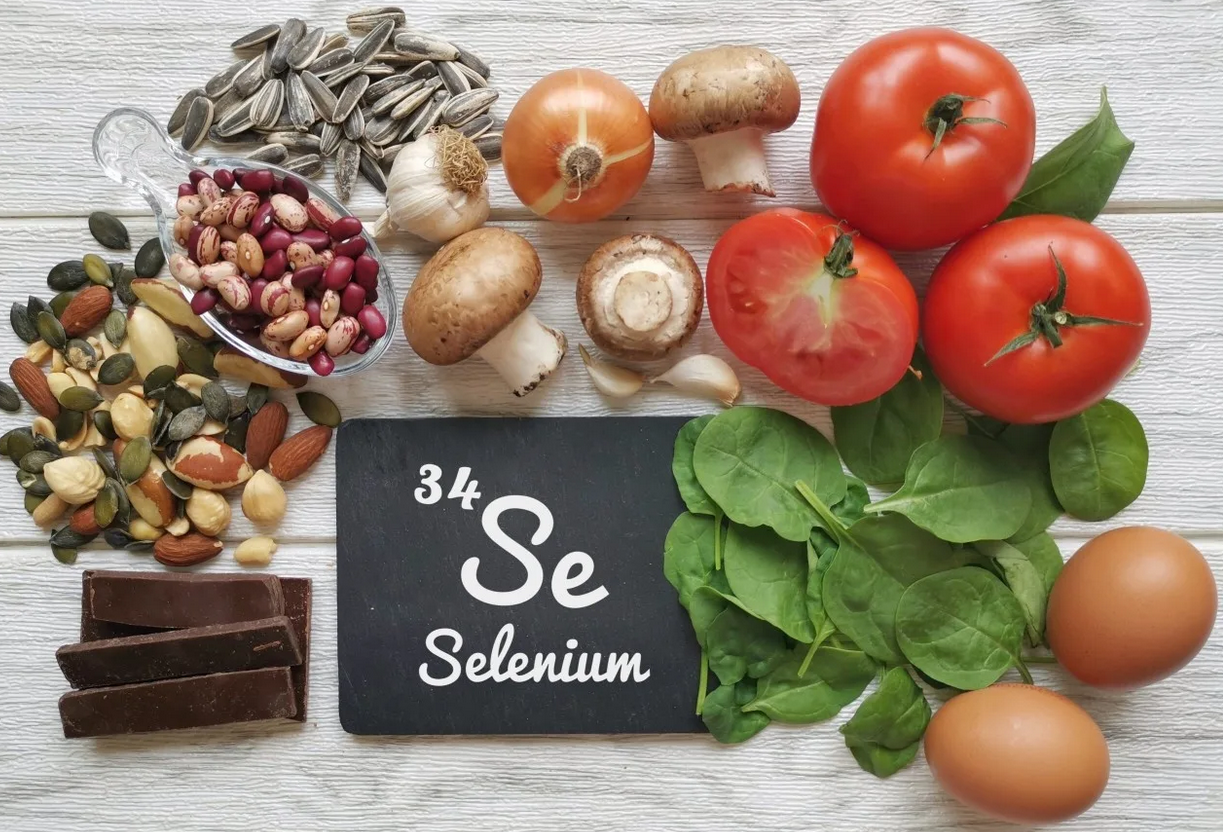
Selenium is a vital microelement-an antioxidantthat is part of more than 25 proteins (selenoproteins). Its main functions are:
- Antioxidant protection:
- It is a part of glutathione peroxidase , an enzyme that neutralizes free radicals.
- Thyroid Support:
- It is involved in the conversion of the hormone T4 (thyroxine) to T3 (triiodothyronine).
- Immunity:
- Increases the activity of NK cells and T-lymphocytes.
- Detoxification:
- Binds heavy metals (mercury, cadmium).
- Reproductive health:
- It is necessary for sperm motility in men.
Symptoms of selenium deficiency
Deficiency occurs in regions with a low content of selenium in the soil (for example, some areas of China and Russia).
Main features:
- Weakness, muscle aches (due to oxidative stress).
- Violation of the thyroid gland (hypothyroidism, goiter).
- Reduced immunity (frequent infections).
- Infertility in men (oligospermia).
- Keshan’s disease (cardiomyopathy, found in endemic areas).
Risk groups:
- Vegans/vegetarians (exclude meat, fish).
- People with Crohn ‘s disease or celiac disease (malabsorption).
- Residents of regions with a selenium deficiency in the soil.
Symptoms of excess selenium (selenosis)
Overdose is possible with prolonged supplementation (>400 mcg / day).
Signs:
- Garlic breath odor (release of dimethyl selenide).
- Hair loss, brittle nails.
- Nausea, diarrhea.
- Neurological disorders (irritability, tremor).
Dangerous doses:
- > 900 mcg / day – risk of acute poisoning (vomiting, liver damage).
Selenium standards in analyses
The selenium level is determined in:
- Blood (serum/plasma) — reflects the current intake.
- In the urine – shows a long-term balance.
- Hair/nails – accumulation over several months.
Reference values:
| Biomaterial | Standard |
|---|---|
| Blood (mcg/l) | 70–150 |
| Urine (mcg/l) | 20–100 |
| Hair (mcg/g) | 0.8–2.5 |
Critical levels:
- < 50 mcg/l (blood) — deficiency.
- > 200 mcg / l (blood) – excess.
When is the test scheduled?
- Suspected selenium deficiency/excess.
- Hypothyroidism of unknown origin.
- Male infertility.
- Living in endemic regions.
How to normalize selenium levels?
If there is a shortage:
- Products:
- Brazil nuts (1 nut = 50-100 mcg).
- Tuna, eggs, liver, garlic.
- Supplements:
- Selenomethionine (100-200 mcg / day).
If there is an excess:
- Cancellation of supplements.
- Increase the intake of sulfur-containing amino acids (methionine, cysteine) for detoxification.
Examples of deviations
- Selenium = 40 mcg / l (blood) + hypothyroidism → taking selenomethionine 100 mcg / day.
- Selenium = 250 mcg / l + hair loss → elimination of dietary supplements.
Conclusion
Selenium is a key antioxidant and thyroid regulator.
Rules:
- Blood: 70-150 mcg/l,
- Urine: 20-100 mcg/l
. Дефицит Deficiency causes weakness, hypothyroidism, and immunodeficiency.
Excess (>200 mcg/l – — toxic (damage to hair, nails, nervous system).
Optimal dose: 50-200 mcg / day (from food or supplements).
Important: Brazil nuts are record holders for selenium, but 2-3 pieces a day is enough!
Добавить комментарий