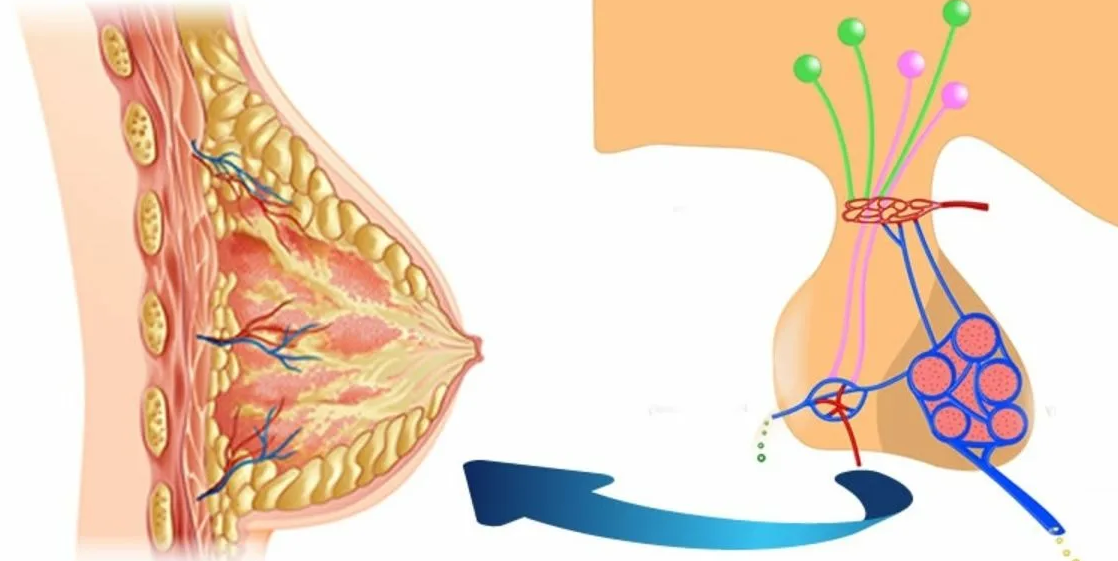
Role of Prolactin in the Body
Prolactin is a hormone produced by the pituitary gland, playing a key role in the reproductive system and beyond.
Main Functions:
- Lactation – stimulates milk production after childbirth.
- Reproductive health:
- In women: influences the menstrual cycle, ovulation, and fertility.
- In men: involved in testosterone synthesis and spermatogenesis.
- Immune regulation – modulates immune cell function.
- Fluid and electrolyte balance – affects the kidneys (fluid retention).
- Stress response – prolactin levels rise under stress, anxiety, and physical exertion.
Symptoms of Prolactin Deficiency (Hypoprolactinemia)
Causes:
- Hypopituitarism (pituitary insufficiency due to trauma, surgery, or tumors).
- Use of dopaminergic drugs (levodopa, bromocriptine).
Symptoms:
- In women:
- Inability to breastfeed (lack of milk after childbirth).
- Menstrual irregularities (infrequent periods or amenorrhea).
- In men:
- Reduced libido, infertility (rare).
- General:
- Dry mucous membranes (due to reduced effect on fluid balance).
Important: Prolactin deficiency is rare and usually associated with generalized pituitary dysfunction.
Symptoms of Prolactin Excess (Hyperprolactinemia)
Causes:
- Prolactinoma (benign pituitary tumor).
- Hypothyroidism (elevated TSH stimulates prolactin).
- Medication use (antidepressants, antipsychotics, antiemetics).
- Chronic stress, nipple stimulation, kidney failure.
Symptoms:
- In women:
- Galactorrhea (milk production outside of pregnancy and lactation).
- Menstrual irregularities (oligomenorrhea, amenorrhea).
- Infertility (due to suppressed ovulation).
- Reduced libido, vaginal dryness.
- In men:
- Gynecomastia (breast enlargement).
- Erectile dysfunction, reduced libido.
- Infertility (oligospermia).
- General:
- Headaches, visual disturbances (with macroadenoma).
- Osteoporosis (with prolonged elevation).
Normal Prolactin Levels in Blood Tests
Levels depend on sex, age, and the laboratory.
Reference Values (µIU/L or ng/mL)*:
| Group | Women (non-pregnant) | Men |
|---|---|---|
| Basal Level | 60–500 µIU/L (3–25 ng/mL) | 60–400 µIU/L (3–20 ng/mL) |
| Pregnant Women | Up to 10,000 µIU/L (500 ng/mL) | — |
| Postmenopausal | 25–400 µIU/L (1–20 ng/mL) | — |
*Conversion: 1 ng/mL ≈ 21 µIU/L
Important Notes:
- Prolactin is secreted in pulses, peaking at night and in the morning.
- The test should be taken on an empty stomach, in the morning, 2–3 hours after waking.
- Avoid before testing:
- Stress and physical exertion.
- Nipple stimulation, sexual activity.
What to Do if Levels Are Abnormal
If Prolactin is Elevated:
- Repeat the test (rule out stress or physical exertion).
- Rule out hypothyroidism (TSH, free T4).
- MRI of the pituitary gland (if prolactinoma is suspected).
- Treatment:
- Dopamine agonists (bromocriptine, cabergoline).
- Surgery (for macroadenomas).
If Prolactin is Low:
- Check other pituitary hormones (TSH, LH, FSH, cortisol).
- MRI of the pituitary gland (if hypopituitarism is suspected).
- Replacement therapy (if other hormone deficiencies are present).
Conclusion
- Prolactin is a key hormone for lactation, reproduction, and stress adaptation.
- Excess causes infertility, galactorrhea, and reduced libido.
- Deficiency is rare but dangerous, leading to lack of lactation and hormonal imbalance.
- Normal range:
- Women: 60–500 µIU/L (3–25 ng/mL).
- Men: 60–400 µIU/L (3–20 ng/mL).
Добавить комментарий