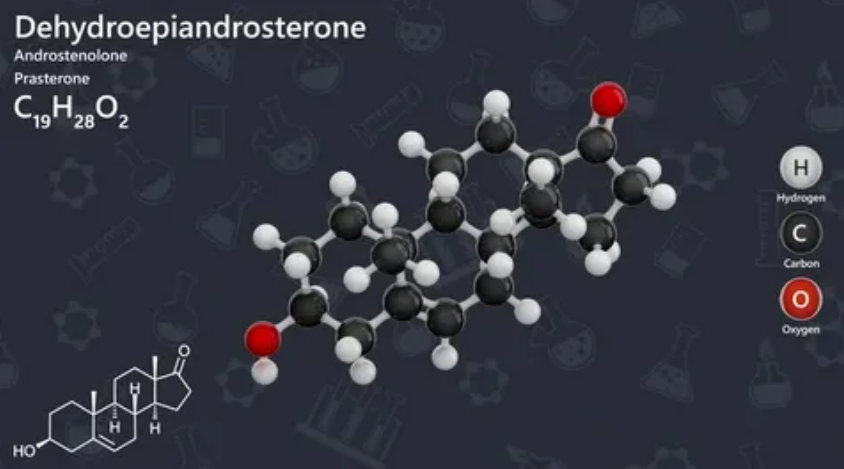
Role of DHEA-S (Dehydroepiandrosterone Sulfate) in the Body
DHEA-S is a steroid hormone produced primarily by the adrenal cortex (95%) and, in small amounts, by the ovaries/testes. It is a prohormone, a precursor to testosterone and estrogens.
Main Functions:
- Source of sex hormones (especially important for women after menopause and for men with age-related decline).
- Anabolic effects (moderate influence on muscle mass and strength).
- Neuroprotective and anti-stress effects (reduces anxiety, improves cognitive function).
- Maintenance of libido (especially in women).
- Affects immunity (can modulate inflammation).
- Linked to longevity (its levels decline with age, correlating with the aging process).
Symptoms of DHEA-S Deficiency
Causes:
- Adrenal insufficiency (Addison’s disease).
- Hypopituitarism (low ACTH).
- Age-related decline (levels drop by 2–3% per year after age 30).
Symptoms:
- Chronic fatigue, low energy.
- Decreased libido (especially in women).
- Depression, anxiety.
- Loss of muscle mass and strength.
- Impaired memory and concentration.
- Dry skin, brittle hair.
- Weakened immunity (frequent infections).
Symptoms of Excess DHEA-S
Causes:
- Adrenal tumor (androgen-producing adenoma/carcinoma).
- Congenital adrenal hyperplasia (CAH) – 21-hydroxylase deficiency.
- Polycystic ovary syndrome (PCOS) (in women).
Symptoms in Women:
- Hirsutism (excessive hair growth on the face and body).
- Acne, oily skin.
- Male-pattern baldness (androgenic alopecia).
- Menstrual irregularities (oligomenorrhea, amenorrhea).
- Deepening of the voice.
- Clitoral enlargement.
Symptoms in Men:
- Usually less pronounced (since DHEA-S is weaker than testosterone).
- Possible aggressiveness, acne, early baldness.
In Children:
- Precocious puberty (early hair growth, genital enlargement).
Normal DHEA-S Levels in Blood Tests
Levels depend on sex, age, and the laboratory.
Reference Values (µg/dL):
| Group | DHEA-S (µg/dL) | DHEA-S (µmol/L)* |
|---|---|---|
| Women (20–30 years) | 65–380 | 1.8–10.3 |
| Women (postmenopausal) | 10–200 | 0.3–5.4 |
| Men (20–30 years) | 140–530 | 3.8–14.3 |
| Men (after 50 years) | 30–260 | 0.8–7.0 |
| Children (prepubertal) | <100 | <2.7 |
*Conversion: 1 µg/dL ≈ 0.027 µmol/L
What to Do if Levels Are Abnormal
If DHEA-S is Elevated:
- Rule out adrenal tumor (CT/MRI scan).
- Test for CAH (17-OH-progesterone test).
- In women – rule out PCOS (ovarian ultrasound, testosterone, LH/FSH).
If DHEA-S is Low:
- Check adrenal function (cortisol, ACTH, aldosterone).
- DHEA replacement therapy may be considered (only under medical supervision!).
Conclusion
- DHEA-S is an important hormone affecting energy, libido, immunity, and aging.
- Excess leads to androgenic effects (especially in women).
- Deficiency causes fatigue, depression, and decreased libido.
- Normal ranges depend on age and sex; abnormalities require diagnostic investigation.
Important: Do not take DHEA supplements without a doctor’s prescription – they can disrupt your hormonal balance!
Добавить комментарий